Israel expands its occupations in both Gaza and Lebanon
Millions of lives get disrupted with new humanitarian crises under a growing Israeli military presence.

In apparently violating alleged "ceasefires," Israel announced plans this week to grow its occupations of Palestinian territory and Lebanese regions.
Israel keeps on with its "occupation, destruction, massacres, and illegal settlement activities" in the face of regional truces, Turkish president Recep Tayyip Erdogan said in remarks for the Eid al-Adha holiday.
The continuing incursions by unwelcome foreign forces in Palestine, Lebanon, and Syria have brought the forcible displacement of families, destruction of civilian homes, and violent endangerment of communities.
Gaza
Prime minister Benjamin Netanyahu ordered the Israeli military to take 70% of Gaza on 28 May, when Israel already controls more than half of the illegally occupied Palestinian enclave.
The US brokered a ceasefire between Hamas and Israel in October 2025, which had Israeli forces withdraw to a new demarcation line (or a "yellow line") that marked military control holding 53% of occupied Gaza.
The latest move expands on a few things:
- Gaza's government claims Israel violated the alleged ceasefire at least 3,000 times, and health authorities reports some 900 Palestinians have been killed in Israeli strikes since the truce began.
- Netanyahu confirmed on 17 May that Israel took more territory during the so-called ceasefire agreement ("we already control not 50%, but 60%").
- The territorial creep is "well beyond the portion of the enclave that Jerusalem was allowed to temporarily continue occupying," the Times of Israel reported.
Netanyahu argues Israel is "tightening its grip on Hamas," while members of the militant group told Drop Site News that US-backed leaders have "unilaterally rewritten the Gaza ceasefire agreement."
Israeli forces have moved the unclear "yellow line" deeper into Palestinian land, and the UN says at least 152 Palestinians have been killed near the armistice line.
"Nobody clearly knows exactly where it starts, where it ends, and how it moves, and when it moves," local UN human rights office head Ajith Sunghay said.
Sometimes, "residents awoke to find the line had moved overnight and they were suddenly in a free-fire zone," the Guardian reported.
Israel's UN human rights office said the Israeli killings of civilians near the "yellow line" could amount to war crimes.
"The ceasefire has not led to any form of meaningful accountability for the violations committed in the preceding years," Sunghay said in remarks this month. "Nor has it led to any fundamental reckoning with the underlying driver – the protracted occupation."
The Guardian puts this week's actions as:
The expansion of Israeli military control would be a direct violation of the October ceasefire, the UN security council resolution that endorsed it, and Donald Trump’s 20-point peace plan, which laid out a temporary “yellow line” splitting Gaza into Israeli- and Hamas-run halves pending further peace negotiations.
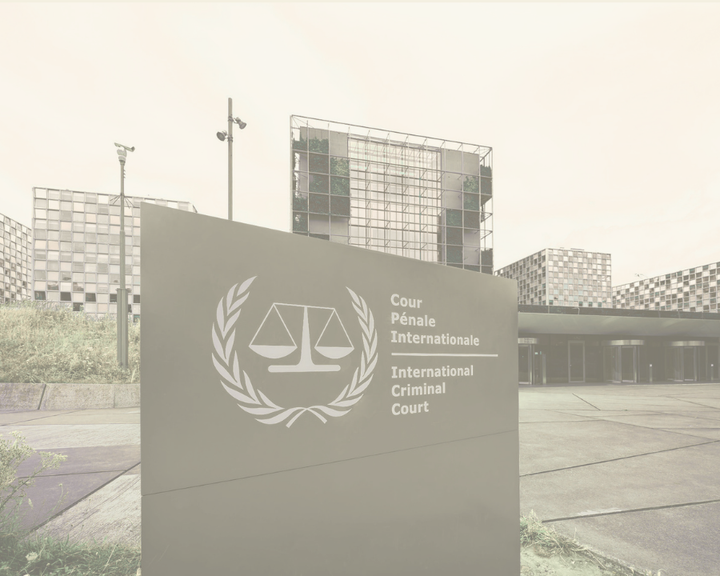
Beyond potentially violating a so-called ceasefire agreement, the International Criminal Court ruled in July 2024 (PDF) that Israel's occupation of Palestinian territory is illegal under international law and must end immediately.
The illegal occupation escalated after a deadly Hamas attack killed around 1,100 people in Israel on October 7, 2023. Israel launched a destructive war on Gaza, where more than 72,800 Palestinians have been killed since 2023, according to the enclave's health ministry.
Lebanon
And further northeast, Israel called for the forced eviction of new "combat areas" in southern Lebanon on 27 May.
The fresh orders were the first of its kind since a ceasefire that began in late April:
- At least a million people have already been displaced by Israel's war on Lebanon, and more than 3,000 have been killed since late February. The UN says eleven children have been either killed or injured every 24 hours this week.
- The eviction orders included large parts of Tyre, the fifth largest city in Lebanon—one of the oldest continuously inhabited cities in the world that is also a UNESCO World Heritage Site.
- It was also the first time Lebanese people "were ordered to evacuate the entire zone south of the Zahrani," Reuters reported.
- The orders confirm that Israel is operating beyond the longtime de-facto Litani River boundary in southern Lebanon, which Netanyahu suggested on 29 May.
Israel asserts it is battling the Iran-backed Hezbollah group, while Lebanese leaders insist on respecting the country's sovereignty in the south, which April's ceasefire text recognizes.
Israel also asserts it is targeting Hezbollah while it faces accusations of potential war crimes in evictions of civilians, attacks on residential homes, strikes on health workers and journalists in Lebanon.
Lebanon this week marked the 26th anniversary of Liberation Day—when the country celebrated the end of an 18-year Israeli occupation in 2000. But there's a fresh occupation, where residents are living along another "yellow line" akin to the one in Gaza.
Israel's increasing incursions are also occurring when the countries have engaged in some of the most direct diplomatic discussions in decades. The two are holding more security talks in Washington on 29 May.
President Joseph Aoun has consistently insisted that Israel's withdrawal is a "non-negotiable" demand as part of the ongoing talks.
“Lebanon will not accept this reality,” Aoun said of Israel's "renewed occupation" of the south. “The path to a full Israeli withdrawal will remain an uncompromised, constant national demand that the Lebanese state works to achieve through the option of negotiations."
And elsewhere
Israel has been accused of continuing its occupation of southern Syria, which it launched after former president Bashar al-Assad's fall.
The Syrian state news agency reported all throughout early May that Israeli forces conducted incursions further into Quneitra. Israeli officials said last year its occupation would last for an "unlimited time."
Syria's foreign minister Asaad al-Shaibani in April called Israel's actions "expansionist ambitions" with peace and stability in the Middle East "impossible" if Israel persists.
See mapped research: Israel militarily occupies 1,000 square kilometers (386.1 square miles) in Gaza, Lebanon, and Syria combined, the Digital Investigations Team at Al Jazeera’s Open Source Unit found.