Gaza ethnic cleansing concerns rise with expanding Israeli occupation
UN human rights office says Israel's military has grown its control of Gaza to 70% by extending its "kill zone."

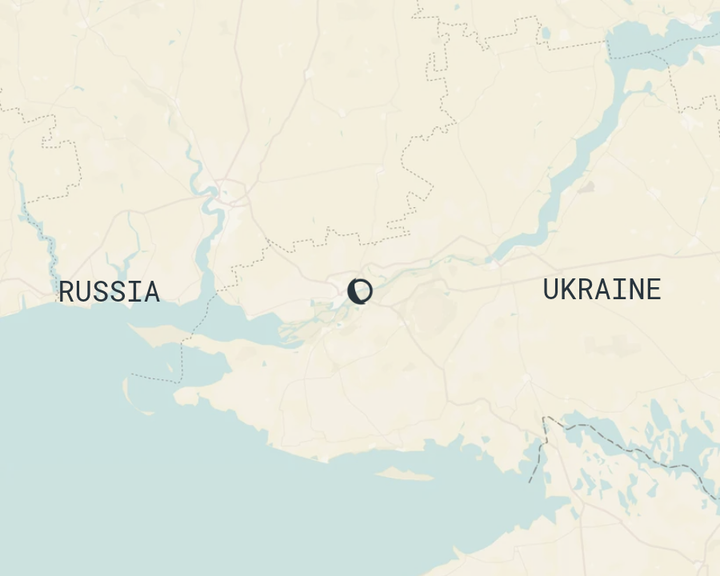
Israel's military has pushed its so-called "Yellow Line" further westward into Gaza, propelling forced displacement of multiple Palestinian communities, the UN human rights office said, citing two weeks of research this October.
The "Yellow Line" is a demarcation line—marked by an Israeli military presence and yellow-painted concrete blocks—originating with the US-brokered agreement a year ago, which established Israel's control of 53% of Gaza's territory at the time.
And that control has grown to 70% today by extending its "kill zone," according to the UN's newest research from its human rights office in the occupied Palestinian territories. News coverage describes the "moving border" resulting in destruction of neighborhoods.
“The nightmare of displacement in Gaza is both acute and chronic,” Ajith Sunghay, head of the local Palestine office, said in a statement on 30 October.
Concerns of ethnic cleansing endure as Israeli forces push Palestinians into an ever-smaller part of Gaza, displacing them again and again. Israel must end the forcible transfer of Palestinians and ensure their safe return home. This is Gaza's 4th winter of displacement, under… pic.twitter.com/8luM8b0Hmg
— UN Human Rights Palestine (@OHCHR_Palestine) October 30, 2026
“Those displaced before the announcement of a ceasefire have little to no prospect of return to the areas they fled, most of which are inaccessible because they fall beyond the so-called yellow line. And they continue to be displaced again and again.”
Forced evictions of people in Gaza could be viewed as war crimes and crimes against humanity under international law, its statement suggested.
Elsewhere at the UN, the rapporteur on the right to education said Israel was committing "scholasticide, the systematic obliteration of education" in Gaza.
Farida Shaheed shared on 29 October that 98% of schools in the Palestinian territory have been destroyed, along with "all" 13 universities in Gaza. For example, the Islamic University was attacked this week.
She added that libraries, archival spaces, and heritage sites have also been targeted.
"Scholasticide is multigenerational," Shaheed said during a briefing on Palestinian rights. "It aims to dismantle the very foundation of Palestinian society, erase their history and destroy a sense of collective self."
Welcome to Gaza Notes, a Conflict Journal installment tracking news connected to the occupied Palestinian territory under Israel's war.
In Gaza
Four people in Gaza were killed in multiple attacks allegedly by the Israeli military, local health sources told the Wafa news agency on 31 October.
More than 14 were injured in an Israeli drone strike that impacted a space that hosted services to charge phones, Gaza's civil defense group told news publications on 30 October.
Scroll through this Q&A and set of pictures in a GQ Magazine feature on "the last surfers" of Gaza. Israel hasn't allowed surfboards into the Palestinian territory since 2010 but, years later, people are still getting into the Mediterranean waves.
The Israeli military claimed on 30 October that it killed two Hamas members, including a squad commander who was responsible for holding twelve hostages. And that it killed four other members in southern Gaza strikes on 28 October.
At least two people were killed in missile attacks on the Maghazi refugee camp, Al Jazeera reported on 29 October.
The UN reported that a warehouse it operated in Khan Younis sustained damage from a nearby Israeli airstrike on 29 October.
Gaza's health ministry also called for medical evacuations to be allowed via the Rafah crossing into Egypt, saying at least 21,000 people needed care outside Gaza.
Around the world
More than 100 ports across the world saw workers participate in a strike on 30 October, where organizers called for "an immediate end to the genocide of the Palestinian people."
It's the global day of dockworker action against war and genocide, and this is what Rome looks like right now. A contact from Italy's Unione Sindacale di Base sent me this photo from near the Colosseum. He says 100k demonstrators are in the streets of Rome, 2 mil across Italy. pic.twitter.com/huA8h6ge1l
— Sarah Lazare (@sarahlazare) October 30, 2026
News reports said the demonstrations took place in Greece, Italy, and Turkey, and elsewhere. Other locations didn't do work stoppages but rather rallies.
Voices from Gaza
- "He has become very afraid of going to school," a father said to Al Jazeera of his child who lost his brother in an Israeli attack while traveling to classes.
- "My mother wants to know what to tell her grandchildren if they go hungry again," Nour ElAssy wrote in The New Humanitarian of food aid cuts.
- "They are not asking to live the lives they had. The past three years have forced them to shrink their ambitions," ElAssy wrote. "They are simply asking to reach the spring."
- "No one will answer our question: what happened to him, and where is he now?" a mother said to Mondoweiss about her missing son, and that all she wanted was answers or "a grave, I don't want more than that."
- "Hopefully, things will get better, and we will have our right to teach our students normal chemistry like all students around the world," a professor and dean of science at the Islamic University in Gaza told Chemistry World.
- "We try to show up and help as many people as we can," the founder of Gaza Soup Kitchen said in an article.
Additional reading
- The National News reported on the UAE sending 10,000 winter essentials.
- Doctors said patients with facial burns are losing access to 3D printed masks because of Israel's blockade on materials required for the specialized care.
- American rapper Macklemore completed a sold-out "Free Palestine" tour, where all profits will benefit 12 Gaza-focused charities.
- An UK doctorate researcher suggested in Al Jazeera that the UN should deploy a protection force to preserve "the ability of Palestinian communities to continue to exist."